Genesis, and the problem of starting from nothing
Ouroboros Genesis has moved from optional setting to the default in Cardano’s mainnet configuration. It solves a specific problem: how does a node that knows nothing work out which chain is the real one?
In 1984 Ken Thompson used his Turing Award lecture to describe a compiler that could plant a backdoor in anything it compiled, including in fresh copies of itself, so the malice survived a clean rebuild from clean source. “You can’t trust code that you did not totally create yourself” was his conclusion. Somewhere underneath, you take something on faith. The only useful question is how small you can make that thing.
A chain has the same problem at the moment of joining. A node starting fresh holds a genesis block and nothing else. It asks the network for the history, gets several different answers, and has no basis yet for preferring any of them.
The long-standing fix was a short list of trusted bootstrap nodes: someone vouches for the truth until you can verify it yourself. It works. It also puts a handful of machines in a position of authority at exactly the moment a node is least able to check.
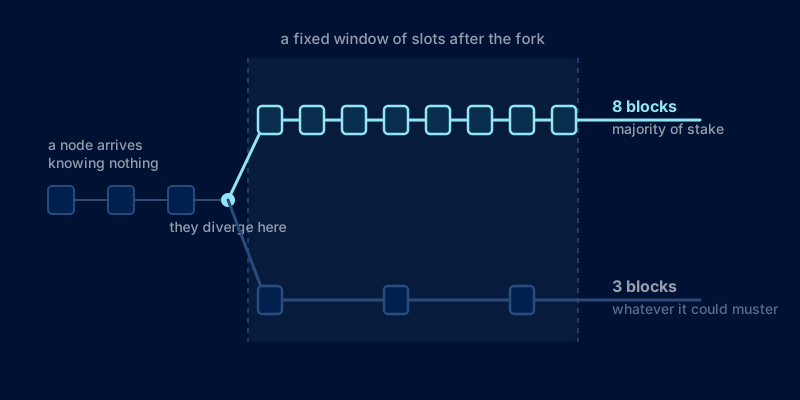
Genesis replaces the vouching with arithmetic. Where two candidate chains part company, it takes a fixed window of slots just after the fork and counts what is in them. The honest chain is backed by the majority of stake, so it fills its slots densely. A minority chain cannot keep up over that window, whatever it does.
The node picks the denser one. It has trusted the distribution of stake rather than a list of names.
The work also lands somewhere better. Bootstrapping spreads across the same pools already producing blocks, instead of sitting on dedicated infrastructure that has to be trusted and creates a degree of centralisation. That dependency had survived on practical grounds for seven years after the paper that set out how to remove it.